The leaves are changing and there’s no predicting where it will be good color, or when. For the first time ever I ventured into western RI to find locatons for fall color photogrpahy. All of these images used High Dynamic Range techniques to capture the hightlight and shadow detail in the high contrast situations. While I definitely needed this technique for cases where the scene was in a dark location (graveyard, stream) and it was backlit, I tried it on reflected light scenes to see if it made a difference and to get some experience in processing those types of images. The first two images were taken 8 October at Carbuncle Pond, and the others were taken on or near the Scituate Resevoir on 13 October.
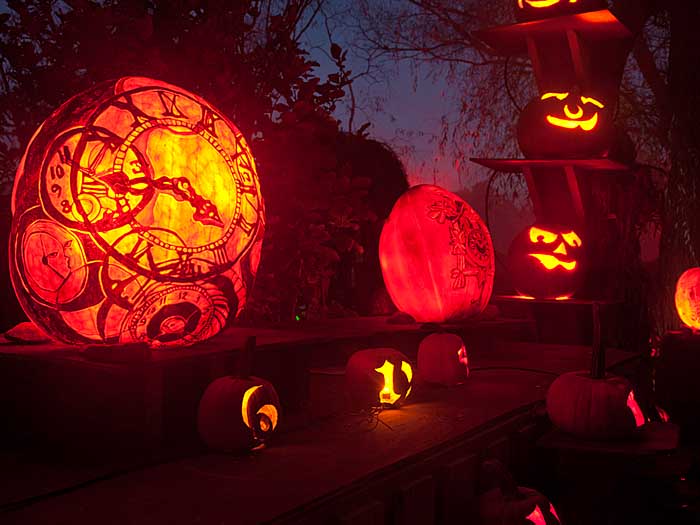
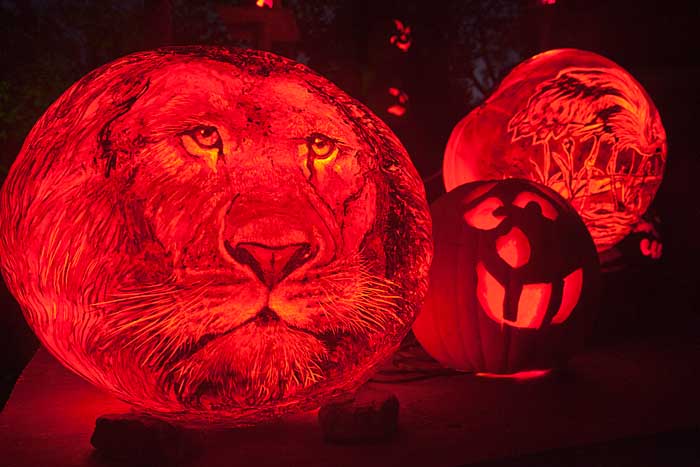
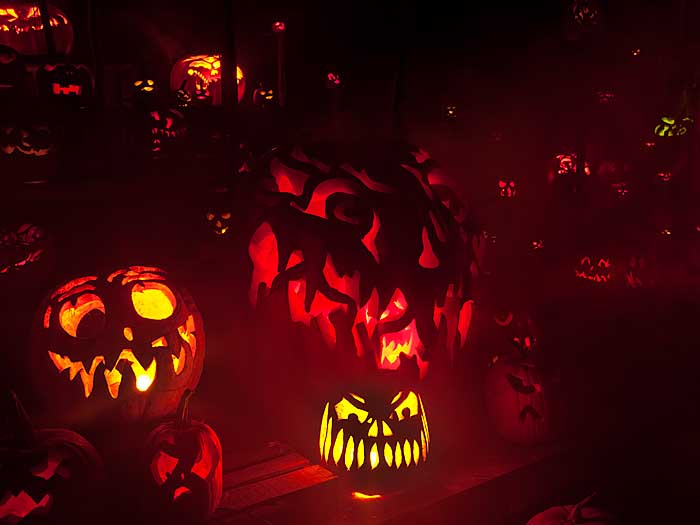
Jack-o-Lantern Spectacular
Thesea photos were taked at the Jack-o-Lantern Spectacular at Roger Williams Zoo. The featured pumpkins are painted with black ink on teh outside and carved on the inside to allow differing amounts of light to shine through the pumpkin. Hundreds of traditionally carved pumpkins also line the walkway and fill in the spaces around pumpkins decoreated following the theme for the year.
Backyard Hummingbirds
After my trip to Costa Rica I planned to again try my hand at hummingbird photography in my yard. In past years, many hummingbirds, all Rubythroated, would visit my feeders. Usually one would arrive even before the feeder was up, hovering in front of the window location where it is usually mounted. Clearly that bird had been here before. This year was different. This year, we only had one male most of the time, with a second one showing up occasionally, and we had only three females. The male dominated the feeder until I set up a second one out of sight of the other. Now the male guards one feeder, and the three females seem to spend more time chasing each other around the other feeder than eating.
After several weeks of photographing, I haven’t been able to catch the male’s gorget fully lit up. Most captures that are a side view of the male results in dark, almost black gorget feathers. There always seems to be a dark patch of red gorget that never lights up. It’s very difficult to catch the throat lit up, and only seems to happen if the bird is facing the camera, but even then, there’s a patch in the center that doesn’t fully light up. I’ll have to experiment more with light placement to see if I can get better results. Up to now the two front lights have been to either side of the flower. Perhaps I need to place one below and directly in front of the bird. In the past, I’ve used a camera mounted flash with a BetterBeamer to trigger the other flashes. That may provide enough direct light, if lack of direct front light is the cause of the dark feathers.
I’ve been using the Canon 7D with the 500mm f4 Is lens since the birds were very wary of me being nearby. Now they are more comfortable with me there and I’ve been using the 100-400 zoom lens. . I can’t rotate my camera for vertical compositions because the built in flash controller of the 7D will not see all the remote flashes if I do so. So I’ve been taking images with less zoom with the intent of cropping for vertical presentation. The portrait images were taken this way.
There are not many more days to photograph hummingbirds; the males will leave soon and the females a couple of weeks later.