Costa Rica 2011 The Art of Biodiversity – Part 4

Bosque de Paz Ecolodge

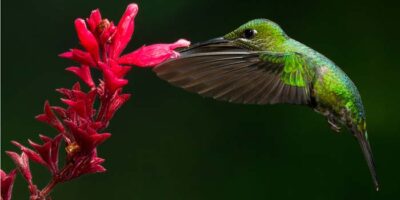
This small lodge, located in a valley between the Poas Volcano and Juan Castro Blanco National Parks offers a diversity of subjects to photograph. The owners, Federico and Vanessa González-Pinto are working hard, and succeeding in, developing an ecological corridor linking the two nationally protected areas.  They are amiable hosts and are truly concerned for the nature of Costa Rica.  In addition to the variety of landscape opportunities of the cloud forest moss-covered trees and rushing streams, the place is teeming with hummingbirds.  There is also an extensive collection of orchids located near the main building that hosts hundreds of orchids, and the owners sponsor orchid research supporting preservation efforts.  On the afternoon of our arrival, I spent some time photographing in the forest, and captured a few images of hummingbirds hovering near the feeders.  The first orchid in the series is a stacked focus images, made from six images that have different zones in focus.  I’ll be writing a blog post on the technique soon.

In addition to the local photographic opportunities, two setups for high speed flash photography were made available on the second day of our stay here and a schedule for use by the participants was established.  Initially we set up hummingbird feeders to attract the hummers to the sets, but switched to flowers after the first round.  While high speed flash set ups make photographing crisp images of hummingbirds possible, it’s difficult to predict exactly what the image will look like until you view the image.  It’s a simple matter to take a photo of the hummingbird with its beak in the flower since it stays there for a few seconds, although you never know what the position of the wings will be.  It’s much more challenging to catch the hummingbird approaching or departing from the flower, or if there is an altercation with another hummingbird. On several occassions the birds were landing on flower pants and breaking them off, making for a not-so-attractive flower.  I walked over to coax a Green-crowned Brilliant off a flower and it stepped onto my finger where it stayed for a full minute.  Luckily, I still held on to the wireless remote control and was able to capture some images.

On the third day of our stay at Bosque de Paz, we made a day trip to a nearby restaurant that has access to the 110 meter Bajos de Toros waterfall.  There are trails through the forest and a set of stairs that descend to the base of the falls.  Two hummingbird high speed flash setups were placed in the open air restaurant to take advantage of some species which were not found at Bosque to Paz.  This was the first time I had seen a black-bellied hummingbird, a very small bird that fluffs the feathers on its head in a curious way when it is perched.  When it is flying, the feathers are flattened aerodynamically.

After dinner at Bosque de Paz, a few of us ventured out around the lodge and down a path to find insects and frogs for some nighttime macro photography.  We did find a small tree frog which was about ¾ of an inch in length, and we had great opportunities with a cicada which had just climbed out of its shell and was still damp and unable to fly.  We all had our turn photographing this amazing insect by flashlight.

Yellowstone National Park in Winter — Part 2

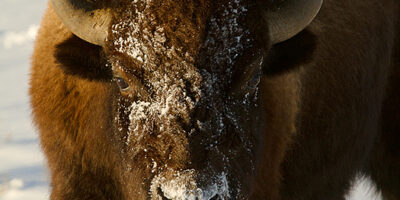
Bison in Yellowstone National Park

After attending the Natural Exposures Yellowstone in Winter Photo Tour described in Part 1, I picked up a rental car in Bozeman and continued my winter adventure based in Gardiner, MT.  Gardiner is only a few miles from the north entrance to the park and Mammoth Hot Springs.  Highway 212 passes through the northern section of the park to Cooke City just outside the northeast park boundary.  This road is maintained year round and is the only means to reach Cooke City during the winter.

  [Read more...]

Fall Color in Rhode Island

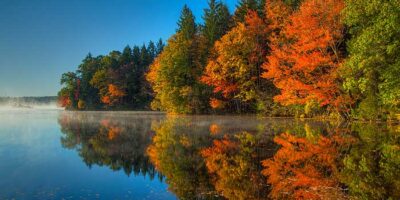
The leaves are changing and there’s no predicting where it will be good color, or when.  For the first time ever I ventured into western RI to find locatons for fall color photogrpahy.  All of these images used High Dynamic Range techniques to capture the hightlight and shadow detail in the high contrast situations.  While I definitely needed this technique for cases where the scene was in a dark location (graveyard, stream) and it was backlit, I tried it on reflected light scenes to see if it made a difference and to get some experience in processing those types of images.  The first two images were taken 8 October at Carbuncle Pond, and the others were taken on or near the Scituate Resevoir on 13 October.

Winter Has Struck Again

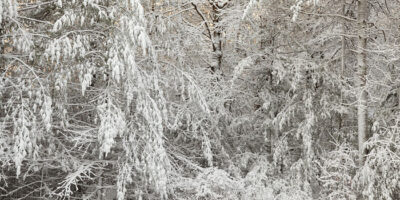
This week the weather forcaseters imagined a big storm hiting the Northeast; however, it only brought a few inches of snow.  The windblown snow that did arrive stuck to everything.  The first image is from the side yard, before the turkeys got to tranpling through the snow.  I also drove to some locations in town where streams pass under the road to see if I could find any good scenes to photograph.  Then I went into the back yard to photograph the birds coming to our feeding stations.   The scenic images were taken with my new Canon 5D Mark II and a 24-105mm IS lens.  The the birds were photographed with my Canon 7D,  and the 500mm f4 with a 1.4X converter on it.  I cropped the images after that.  It’s amazing how small a crop can be made and retain the details of the feathers.

Kauai, HI

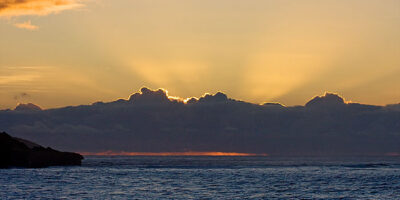
I had the opportunity to be in Kauai while on a job and managed to get out and photogrpah on the weekend of June 13-14.  Although I’ve been to Kauai many times over the last 30 years, this is the first time I’d  seen large waves on the south shore.  There was a large storm off to the north that resulted in many waves coming in from different angles.  At some coves it looked like a washing machine as waves came in from different angles, sometimes combining intoa great froth of water.

Karri Forrests of West Australia

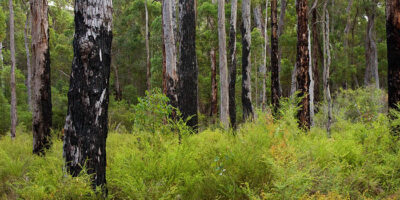
The karri tree  grows only in South West Australia and is one of the tallest trees in the world.  A hardwood tree growing to 90 meters in height, it sheds its grayish bark each fall leaving a pile of shredded bark at its base, revealing smooth new bark in patches of white, yellow, and orange. The trunk extends straight up and has branches only near the top.

Several of these tress have been put into service as fire towers by building platforms near the top made accessible by ladders attached to the trunk.  Several trees have also had these ladders intalled to permit access by the public.  As there is only one ladder on the trunk, people decending must pass those accending the tree.  Not for me.

These images are from Gloucester National Park, Beedelup National Park, and Warren National Park near Pemberton, West Australia.

West Australia Caves

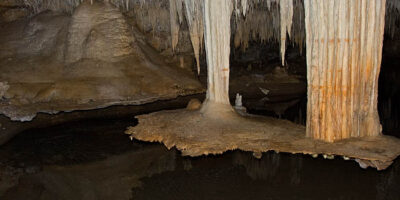
Many caves are located in the Cape K=Leeuin Naturaliste National Park.  While three of these caves are electrically lit, two with guided tours and one self-guided, there are othes which are explored wearing a hard hat and headlamp.  I did not explore these, but I did venture into Mammouth Cave and Lake Cave. 

Mammouth is self guided, so there is as much time as you need for photography; however, tripods are not allowed.  This made photography difficult but possible using the railing in corners where the camera could be suppported. This limited the selection of subjects to those near the corners of platforms.  In Lake Cave it was more difficult, as I was part of a large group.  The only useable images were made with the camera placed on teh edge of the platform.

The caves are quite beautiful, lit as they are with yellow and redish lights.  Using flash revealed the true color to be more whitish or grey, what would be expected for limestone.  Thin tubes are formed as mineral laden water drips through a tube, adding material to the end of the tube.  In Lake Cave, the main feature is actually suspended above the surface of the water.  The base was originally attached to the bottom of the  cave lake, which was disolved over time and lowered.

The Pinnacles

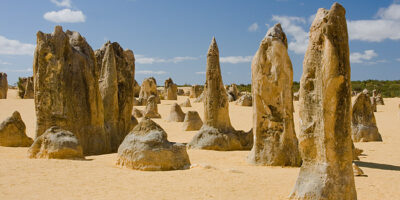
Nambung National Park is a three hour drive along the coast 245 km north of Perth.  Within the park is the Pinnacles Desert, an area of yellow sands and limestone outcroppings.  Thousands of stone pillars stud the area, some up to 12 feet high. Starting as a area of sand dunes blown inland from the beach, rain water leached lime from the sand near the surface and concentrated in lower levels of the dune, cementing the sand together into limestone.  The pillars were a result of a hard crust of calcrete that formed over the top of the limestone.  Water seeped through cracks in the crust and further dissolved the limestone leaving columns of harder limestone under calcrete caps.  Winds blowing the sand away exposed the columns we see today.

I arrived at the Pinnacles at mid-day, making photography difficult, although the day was clear, with little breeze.

On the Road to Homer, AK

For many years, Jean Keane fed fish to eagles in Homer, Alaska during the winter months.  The town established an ordinance prohibiting the feeding under the belief that doing so was detrimental to the well being of the eagles.  While there is much controversy over this decision, 2009 is to be the last year that the Bald Eagles will be fed during the winter months in Homer Alaska.  I decided to make the trip and try my luck at photographing eagles in flight.


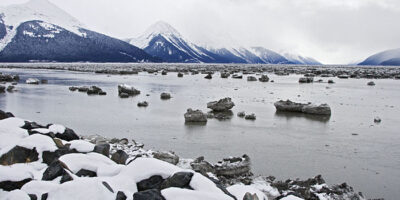
The road from Anchorage to Homer passes along Turnagain Arm, a large expanse of water which is very shallow due to the silt build up from glacial waters.  The huge tidal difference is evident in the chunks of ice that form when high tide brings in a lot of water, and then flows out at low tide leaving the ice sitting on the bottom.


Further along the road to Homer are several rivers. The rivers keep flowing, with the amount of ice on the surface varying with the flow of water.